The serial entrepreneur is a fascinating study. Someone who dedicates years to grinding on a business model and perfecting their product in hopes of having that coveted “exit” where optionality includes retiring on a beach drinking Mai Tais. After all, that is the American Dream, isn’t it? However what about the people who have put themselves in that position, not once, but twice, and then are crazy enough to start over… particularly by building a company so untraditional (indoor private golf club) in an industry that thrives on tradition. After this interview it’s clear: serial entrepreneurs are driven by a force the average worker does not possess. Building is their currency and progress is their oxygen.
Over a month had gone by since seeing Intown Golf Club’s CEO, Michael Williamson, in person. The tentacles of the pandemic have rendered workers to their remote living rooms and golfers to their local muni (win). Weekly Zoom calls don’t capture the in-person camaraderie and culture all great businesses possess. Today was different as the Kula coffee shop manager, Andrew, let us slide to the back of the shop so we could all learn Michael’s entrepreneurial story. Over the next hour and a half, the sound of an espresso being made over a coffee-shop-soundtrack made you think for a moment, life was back to normal, talking entrepreneurship, fund-raising, and new ventures.
That’s where we pick up the entrepreneurial journey of Michael Williamson.
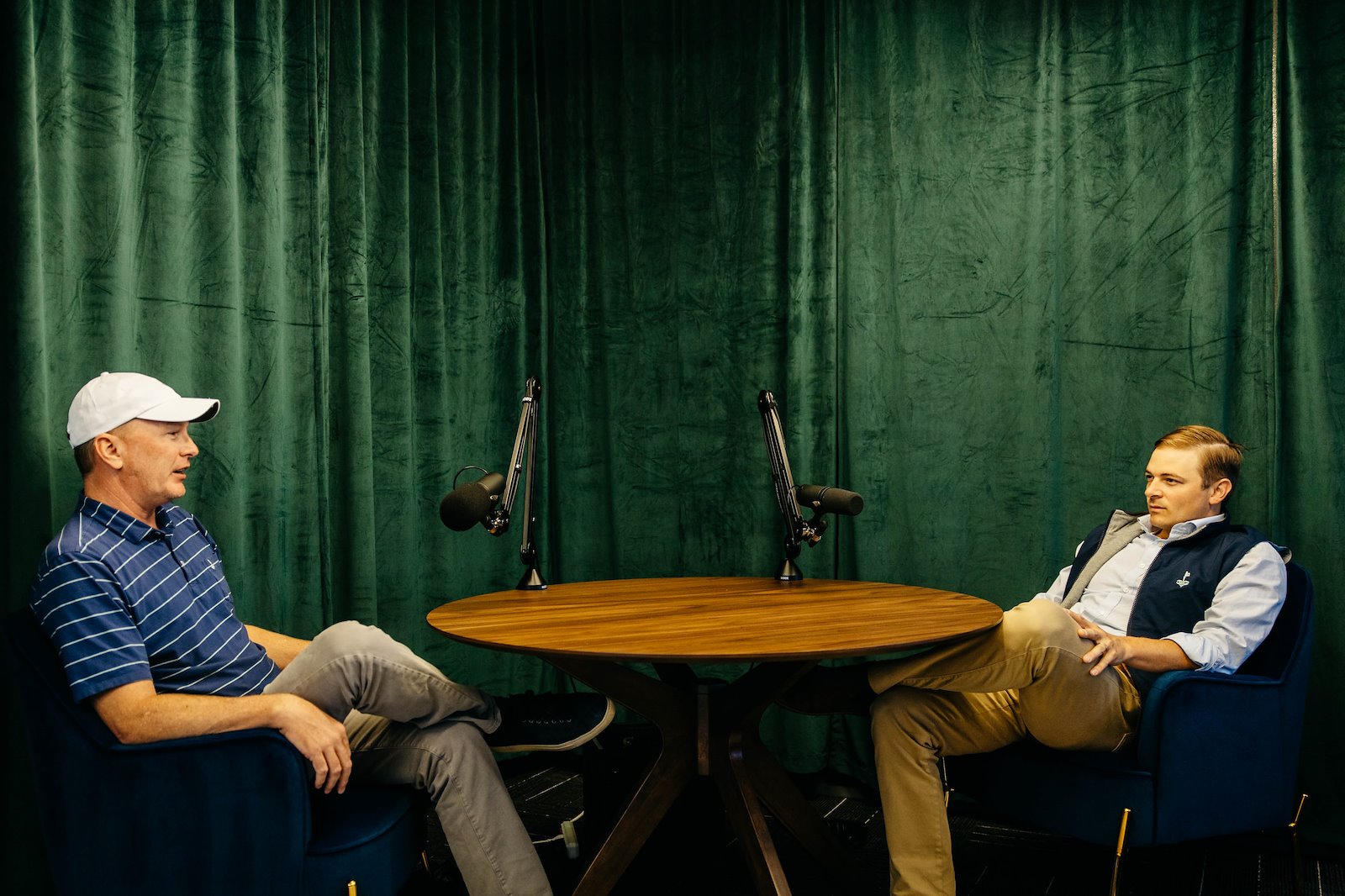
Jon Birdsong: Did you always know you wanted to be an entrepreneur?
Michael Williamson: Yeah. I was very fortunate to grow up in an entrepreneurial household. My father is a serial entrepreneur.
JB: Did you grow up in Georgia?
MW: Yes. I grew up in Snellville… Gwinnett County. And we always had family business from the time I could remember and all of us worked in them.
JB: What type?
MW: Different industries. For example, my dad invented an air brush paint for wildlife artists which turned into a distribution company for wildlife art supplies which grew to a substantial size.
JB: That’s a specific niche!
MW: It was just something he was passionate about as an artist and just loved it and innovated a product and kind of went from there. So, yeah I always wanted to be an entrepreneur and have my own business mainly from the experience of being part of it as a kid.
JB: In highschool or middle school, were there paint brushes that got shipped to the house regularly?
MW: Oh yeah. That business operated out of our house for a number of years. After a few years, we had 20-25 people set up in the garage taking orders.
JB: No way, that many? In Snellville?
MW: Yep. As eight-year-olds, we were in there working on mailouts and stuffing envelopes. Every summer, my brothers and I worked in the warehouse on different parts of that business from sweeping floors to taking out the trash to eventually packing orders and shipping them out.
It was always fun to have a family business. All of our family worked: me, my parents, my brothers, everybody.

JB: Did y’all talk about it at night?
MW: Constantly. That was the topic of conversation. Looking back, my dad was tougher on us than any other employees but was a huge believer in getting us to think we could do and accomplish anything we wanted. He always encouraged us to build great things, but he definitely had tough love which I was always sensitive to even in the software company he started: Horizon Software. I very much appreciate that approach now.

JB: Before we get to Horizon Software, you’re a graduate from the University of Georgia? Did you look anywhere else?
MW: Not really. It was always my number one choice. When I was five years old, they won the National Championship, so I’ve been a big fan my whole life…and (laughing) they haven’t done it since!
JB: During your time at UGA, did you build things or was it more just having fun?
MW: During my junior year of high school, the mail-order catalog for the wildlife art supply business was growing to where we had a big warehouse and it had outgrown our garage a few years prior. At that time, you couldn’t buy software like you can today, so my dad hired a couple programmers and built a whole supply chain management solution to run the mail-order catalogue business. It handled inventory, warehousing, distribution, sales, and basically everything to run the business. It wasn’t really a packaged software product, but it was built to automate that business, which it did very well. At that point I became fascinated with software and technology and I was learning to be a DOS programmer at my last couple summer jobs before heading to UGA. It was a great opportunity to be part of learning what it was like to build a product. This prompted me to major in computer science. I wanted to be a software engineer. That was my main goal going into college: to learn how to be a software engineer.
JB: Interesting. Tope from Calendly was a UGA engineer as well. And what next?
MW: Around the same time that I went off to college, the product at Horizon was getting really good and it began running our whole business flawlessly. My dad had the idea of spinning the product out and creating a software company because there were a lot of businesses that needed help automating their supply chain and that was the creation of Horizon Software. He spun that out as a separate business and ended up selling the mail-order business, WASCO (Wildlife Art and Supply Company), and focused all the efforts on this new software company.
JB: At what point does an entrepreneur cut bait and go attempt to catch the bigger fish?
MW: Well, let me take a few steps back in the story. As an entrepreneur, you know there are several ups and downs. A few years before the software was created, there was a close employee that embezzled about $900k. He stole cash. He stole inventory.
JB: Woah.
MW: They basically set up a competitive company in the next town over with our inventory and our cash. It was a very dark time. One day the business is thriving and the next, it’s overdrawn by $100k and none of the vendors have been paid and a lot of the inventory is gone. It was a big struggle. Everyone told my dad to declare bankruptcy and start the next thing. Instead, he called all his vendors weekly and built the business back up over the course of three or four years to where it was. It was at that point, he sold the business and focused everything on the software side. He knew it was the future and bet it all on software. This was in the early 90’s.




JB: Who was Horizon’s market?
MW: For Horizon Software, he really didn’t have a market. We just had this product that worked really well and the belief that other people needed it.
So during college, I was studying Computer Science and during the summer I was a software engineer for Horizon and every chance I got, whether it was spring break or summer break, I was coding.
JB: Did you graduate with a Comp Sci degree?
MW: No, about my junior year, I switched to the business school to Management and Information Systems (MIS) and the reason was the Comp Sci at UGA was very technical and very hardcore programming which I liked but I also wanted more of the business side, because I knew I wanted to be an entrepreneur. I wanted a more well rounded experience…not just engineering. MIS was a good balance. But yes, in the summers, I was a DOS based programmer.
JB: Upon graduation, it made sense to continue the work where you left off I assume?
MW: Yep. And I know a lot of people who have had bad experiences with family businesses, there’s a lot of drama. For us, it was the opposite. It was great. My wife Michelle, who I knew from middle and high school, she joined Horizon, I joined Horizon, my brother was there. He met his wife at Horizon. It was very tight knit. I was very fortunate in the sense that I was able to get exposure to many sides of the business very early on. As the company started really growing, we viewed it as, “Hey, we have this great opportunity with this family business, let’s grow this thing as much as possible.” So I started as an engineer and then eventually managed a small team of developers and then managed our whole R&D team.
JB: What market did Horizon eventually sell into?
MW: My dad was really searching for a market. He brought on one sales rep to just blindly call on different areas. One of those calls was a school in our local town. They bought and shipped books, school supplies, food, etc., and he thought, “Maybe that’s a niche” and he found the food management department was a big niche. They bought tons of food, they managed big sets of inventory, they produced food, and fed kids every day. It was this huge market where there was no automation and all manual. Once we discovered that, my dad said, “This is it, we’re going to double down on food service, K-12.”
And, you know how it is, trying to get the first customer is the hardest, but he finally broke through and a district in Lexington Kentucky was the first customer. After that we started building off that momentum. The business was obviously zero when we started and when we sold it, it was close to $40M in revenue in 2008.
JB: Oh wow!
MW: 15 years, no outside venture money, all bootstrapped with almost 200 employees.
“15 years, no outside venture money, all bootstrapped with almost 200 employees. ”
JB: You graduated in ‘97. The company was sold in 2008. So you spent your first 12 years out of school in a high-flying software business.
MW: I stayed on after the acquisition for another two years, so 14 years.
JB: Who purchased Horizon?
MW: Roper Technologies.
JB: Let me get clarification. By the time you were 30 or so, you’d seen a business go from zero to 198 employees, get acquired by a public company, and then stay on that public company for a few years?
MW: Yes! It was a great experience in that there are different skills and decisions made when going from zero to million, from $1-5M, from $5-10M, from $10-$20M, from $20-$40M. There’s these different parts of it and we experienced so much of that. Five years prior to us selling, my dad moved to Florida and wanted to focus all of his time on sales and marketing, so I managed all product and operations as the COO. At the time we had about 150 employees, and they were still all going to him because he is a very type A strong-entrepreneur, but when he left, I was the one employees started going to, which helped on the experience front.
JB: That was late 20’s?
MW: I was placed in some big jobs at a young age, which I feel very lucky about. It gave me a great experience. When I was 30, I was a key executive in a pretty big business.
JB: Several people have a difficult time with that much responsibility that early. What were some of the guiding principles that helped you?
MW: I think in any business, any startup especially, a lot of it is about pure brute force perseverance and grit. You’re 100% focused on the task at hand and you’re implementing customers, you’re hiring, you’re managing team members, and I had two mentors: my dad and a guy by the name of Glenn Davenport – who joined us from Morrison which he took public. We brought on Glenn to be President and help grow to the next stage. Glenn and I were side by side operating the business in different areas and I got the opportunity to spend every day learning from Glenn with all the new challenges the business faced.


JB: Did you ever think about getting your MBA?
MW: Not really at that time because we were so busy, but I kind of regret I didn’t do that.
In 2008, my dad just really wanted to retire. He built a great business. It had cash flow, great growth, bootstrapped and ran a little process and Roper Technologies acquired us.
JB: Was this before the financial crisis?
MW: It was. We closed August 2008.
In 2008, my dad just really wanted to retire and he also had a sense of the impending economic issues that turned out to be correct. He built a great business. It had cash flow, great growth, bootstrapped and ran a process and Roper Technologies acquired us.
JB: Were you excited about potentially staying on?
MW: You know I was. I had three main goals to stay on. Roper bought 100% of the business and I no longer had equity. One way I looked at the future with Roper was they are a publicly traded company and I get the opportunity to see what it’s like working inside a publicly traded company. I saw it as an MBA on steroids to learn what it was like to be part of a big public company.
The other goal I had was more of a goal for myself which was to prove that I could do it on my own without Glenn and my dad — which I was personally always sensitive to. I wanted to prove to myself that I could do this.
“I wanted to prove to myself that I could do this.”
JB: “This” being running the business at that level?
MW: Yes, completely on my own. Because up to that point, I had Glenn and I had my dad. When we sold, they left and it was just me. Then my third goal was focusing on a smooth transition. Being there 15 years, and working very hard for 15 years, my best friends and the people I was closest to were also employees. It was very much a family culture which means we had 180 employees that were very close to me. I wanted to make sure the transition went well and I didn’t hang the people I loved out to dry.
JB: Did you achieve those goals?
MW: I stayed two years and it was another great experience but it was tough. Roper management were extremely smart people and I remember my first board meeting: it was a two hour call, two hours of questions that is. I could not answer one question they asked me. They were asking questions I hadn’t even considered. The way they looked at a business was just a totally new perspective for me. There was a whole new set of metrics I discovered quickly.
As a scrappy family owned business we focused mainly on two metrics: how much cash was in the bank and how many purchase orders we had that month.
(both start laughing)
JB: I’ve heard that phrase: shoe box accounting. Money in the shoebox, money out of the shoebox, just make sure there’s money in the shoebox.
MW: Exactly. So now you have these very savvy financial managers and they’re asking us about pipeline velocity and projections of metrics I’d never even heard of. So I got this experience of understanding what to track and manage from a metrics perspective and use them to build a better business.
Staying on with Roper really helped me evolve and through those two years, I knew I wanted to go start a software company on my own. I just really like the early idea building phase.
JB: At the end of 2010, you probably could have stayed at Roper for a long time. You likely could have made a career out of it, right?
MW: Yeah, I think so.
JB: Not to get too far ahead, but why were you looking at going and starting something when presumably, you had this great corporate job and you were a rising star in a public company?
MW: From the time I could ever remember, it was just innate to be ambitious. It was not acceptable just to have a normal job. In my family, you were pushed to do well and create something special and build things. We were always pushed towards that way of thinking. Both my brother and I looked at the opportunity and said, “Wow, we’ve got the potential to do even more.”
JB: Tell us about the transition from cushy corporate life to starting back at ground zero?
MW: When I was at Roper, I felt more like a CFO. I wasn’t in the weeds of the product innovation or roadmap. It was just kind of high-level which is good but what I love is the early idea, iterating, and focusing on a clear problem that needs to be solved and then seeing the everyday change. I just love that. So I wanted to do that again. That was the real driver for moving on from Roper…and I felt like I had accomplished the three goals I set to achieve.
JB: How did you decide on what you would build next?
MW: My experience at Roper taught one important thing that became the thesis of IO Education and that was the use of data to drive performance is very powerful if you do it right. If you have the ability to look at your performance and track the right metrics, measure that performance, and take action based on that data to improve, it can have a transformation effect on the outcome. But that is really hard to do. There is a lot of work to do it right.
So I looked at using data in education, healthcare, and government — some of the biggest markets I could think of and I did some work around each of those and settled on education because I had a good understanding of the go-to-market processes there through my time at Horizon. The other benefit of education was all of the data around K-12 public school districts is public information and post online.
So the original idea for IO Education was a benchmarking tool for superintendents. For example, if I’m a superintendent of a 20 school district in rural Georgia, with these demographics, with reading and math performance, let me look at all the other 20 school districts in the country like me that had the highest academic performance and let me study their characteristics and see what’s different. The MVP would be benchmarking.
JB: Give us examples of those characteristics.
MW: A big part was the budget and where they spent it. For example, how much do they spend per student in total? How much of that do they spend on instruction material, technology, administration, etc. There is a ton of financial data that is interesting. Then there’s staffing data. For example, how many students per teacher? All in all, there’s 300-400 metrics that every school and school district collects and reports to the federal government and then the government publishes that data to everybody. Typically researchers use that data to study and research it for academia.
Our initial idea was to create a benchmarking tool that allowed school districts to compare themselves across all these important metrics.
JB: Did you know people would buy this if you built it?
MW: No. It was more of a gut feeling where ‘if I was a superintendent at a school district, this data at click of a button would be incredibly valuable.’ Any executive manager would view this data as very valuable. And I talked to a few people through my relationships at Gwinnett County schools and they loved the idea but I didn’t have a ton of market research — more of a gut reaction and went with it.
JB: What was your first step in building the product?
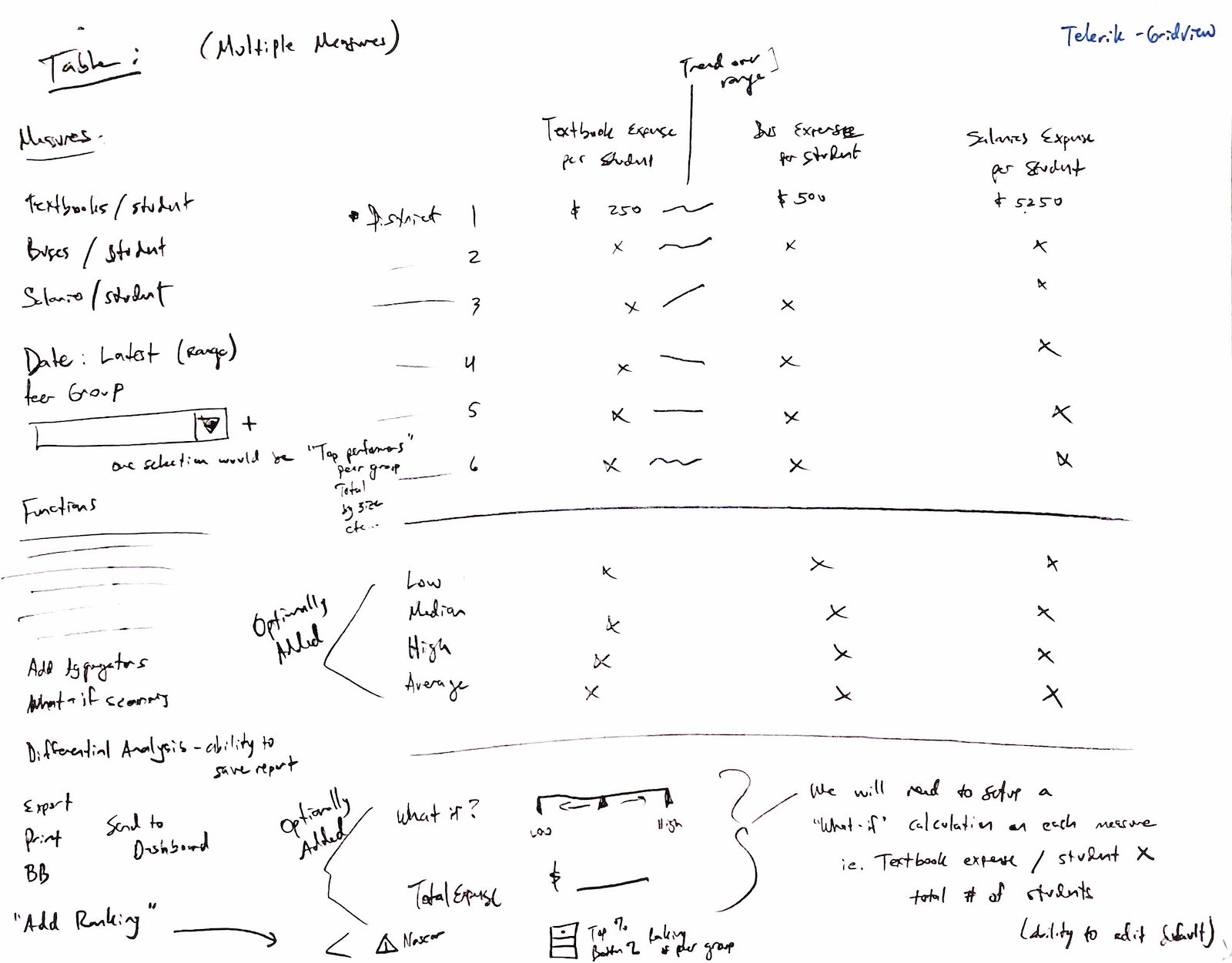
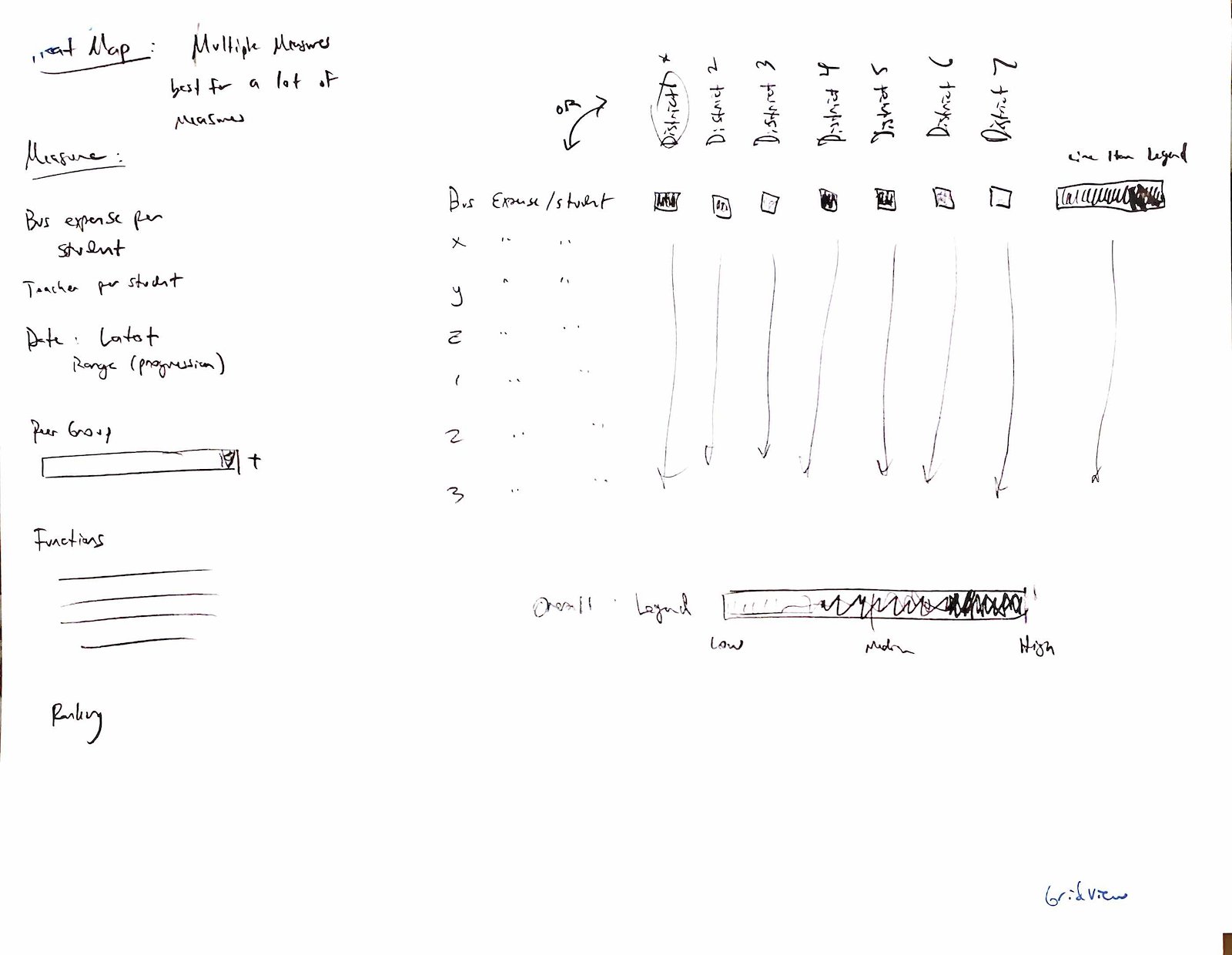
MW: Funny you ask. I still have these at home, but on pencil and paper, I had drawn out exactly what this product was going to look like. So I had this stack of papers full of sketches and then hired a UX/UI designer and the first thing we did was build a prototype of exactly what I’d drawn. We iterated on it and showed it to some potential customers. Once we were happy with it, the next hire was an application developer and we started building it.
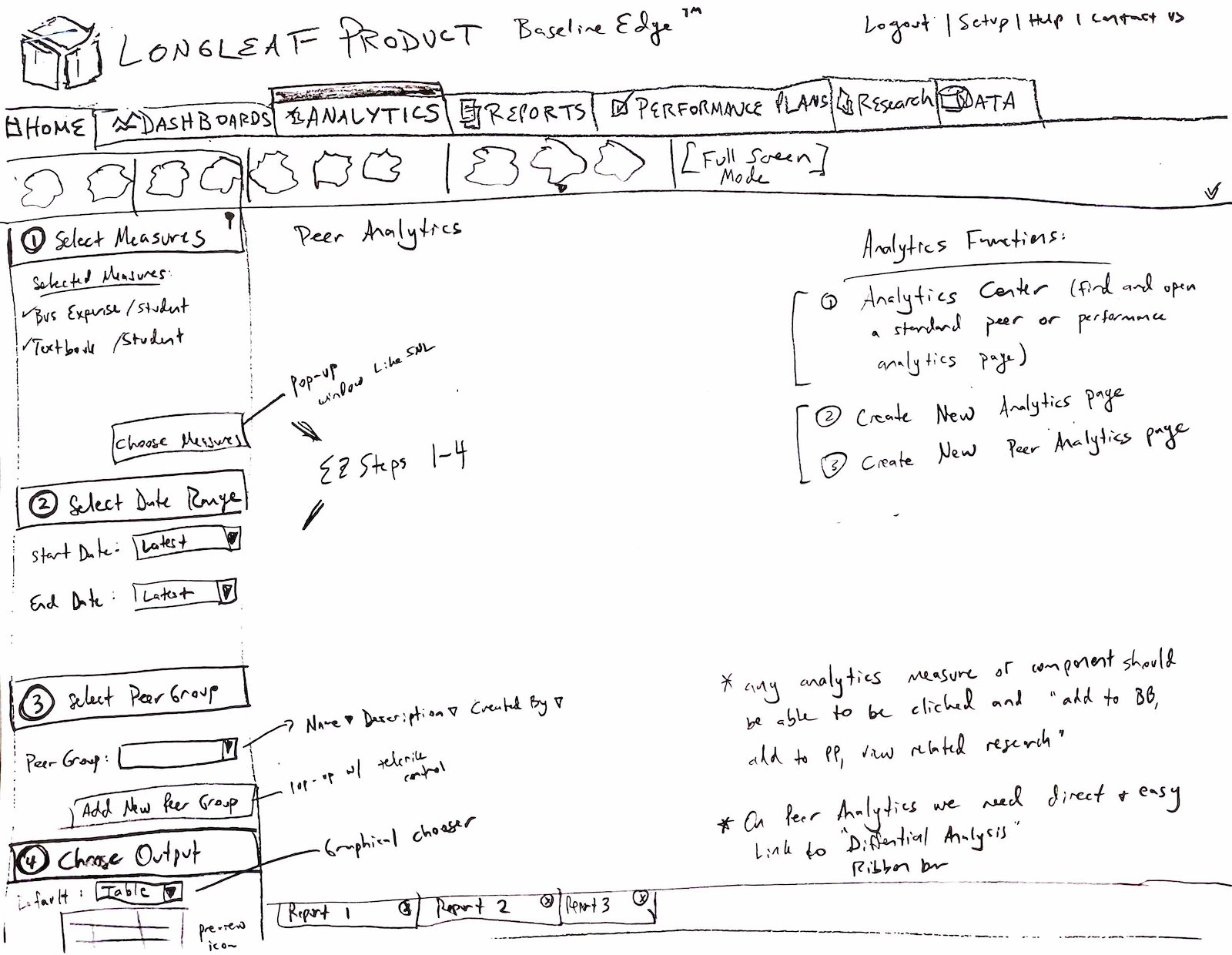
Early Sketch of Longleaf Product
It took us about a year and a half to build it. There were so many problems. A big part of the thesis was we were going to take this big data set, all CSV files, and integrate it all while making sure it was accurate and timely. Way more complicated than I initially thought. Simultaneously, I was going to conferences, pitching people, sharing the ideas, and what I found was…and this was an important learning… a hundred percent we showed it to, loved it. Now, once we started to try and sell it, it was hard. It was really hard to get people to pay for it. One of the problems was it wasn’t a natural part of their workflow and I still think today that product would be an incredible tool, it was just too early and now there are some other companies tackling that exact problem. It was just hard to get people to pay for it.

JB: So you were living the nice-to-have vs. need-to-have dilemma so many entrepreneurs face?
MW: Oh yeah. I kept viewing it as, “If I were a superintendent, I would buy this!” It also wasn’t that expensive, we’re talking approximately five grand a year, which for a school district isn’t much. When the initial product was built, it was used a few times a year during budgeting some board meetings, which was great, but that was about it.
JB: How much were you burning a month?
MW: We kept it really lean. I brought on a co-founder, Chris, who worked at Horizon with us for many years and was running all of our customer operations there. My wife Michelle was doing all of the accounting and financial analysis like she did at Horizon. We had one designer and one engineer and me doing sales. I didn’t pay myself for several years. We had a very good product considering the shoe-string budget but it wasn’t working from a sales perspective. So we had to do a huge pivot.
JB: What did you need to see to make the decision to pivot?
MW: It’s a feeling where everything you do is hard. Entrepreneurship is very hard, but some things should be easier than they were. We were faced with the decision of how much longer are we going to try and get traction or do something else?
“Entrepreneurship is very hard, but some things should be easier than they were.”

JB: What was traction when you say that?
MW: We had a couple customers but less than $40k in ARR. However, we had a fortunate circumstance with a CFO up in Boston who was that one customer who absolutely loved the product — I think every early startup has that one customer, and this lady was that for Longleaf Solutions (name later changed to IO Education). She was in a very high achieving school district. It was an innovative school district with a great superintendent and she really valued what we had built. I remember her saying “I’ve got a principal in my school district who is a data junkie and you’ve got to meet her and see how she’s using data in her school because I think some of the concepts you’ve created for me could apply to her.” So we flew up to Boston to learn how this principal was using data to help students and perform student interventions.
JB: Real quick, tell me the momentum of the business at this point in time.
MW: It was uncomfortable. We were at the point where we were thinking, this is not going to work and something must change for us to achieve the success we envisioned.
It was never about giving up, it was more about finding that need-to-have product that we were confident was there in this market around the work that we were doing.
So we met with this superstar principal, Cathy, in her weekly data meeting and watched how she managed with data — I mean she was amazing. Every Wednesday afternoon, she got her teachers together and they had this huge magnetic whiteboard and they had a magnet for every student by grade level and they had 10-15 people sitting around the table and each person had a stack of papers. One person had the attendance records, the next person had the reading scores, the next person had the math scores, and the next person had behavior data…and they would say, “Let’s talk about Student A” and then manually organize this data together. They would put the students in these groups and the goal was to uncover which ones were struggling early on, intervene, and put strategy around them to help the students to get back on track.
It was an incredible process which I found out, most every school in America does to some extent but it was very manual and it took three or four hours. And what we learned was 90%-95% percent of the four hour meeting was shuffling paper and building spreadsheets to put the data together, and 5% of the meeting was talking about the students.
JB: What was your initial reaction after observing the first meeting?
MW: It was an “aha moment.” We had the feeling that not only would this make a huge impact because you’re talking about each student but it’s such a manual and laborious process that it would be incredibly hard to implement as a school to do it right. What we also found was typically good schools were good because you have a good principal leader, and Cathy was a superstar principal. She was willing to do this four hour meeting every week, but my first thought was, there was no way 105,000 K-12 public schools are doing this — it’s too hard and so we doubled down and said we’re going to solve that, we’re going to solve the student data meeting. We were lucky that we had Cathy. Chris and I flew to Boston almost every week and sat in those meetings week after week after week and took the core benchmarking product that we built and revamped it for that weekly data meeting and it was all about the students. This made it a must have product because they were already doing these meetings, it was part of their work flow. It was a part of their process.
“It was an ‘aha moment.’”
JB: How did you know the market was big enough? Was every public school doing weekly data meetings?
MW: I asked Cathy, “This process is amazing, does every school do this?” And she said, “Yeah pretty much. every school does some flavor of this.” Fast forward, what I found was her’s was A+, others were not as good, but pretty much all schools do some kind of student data analysis, try to find struggling students early and intervene and in many states — you’re legally mandated to do that.
JB: That’s a must-have.
MW: Exactly. They’re doing it, but they are doing it very manually and it’s very labor intensive and not efficient.
JB: This realization came in 2011?
MW: Later. Mid 2012.
JB: Wow, so you’re two years into the original hypothesis?
MW: Two years and a lot of sweat and money…we really had to start over. It was a whole new product.
JB: From a leadership perspective, how did you maintain momentum and keep folks excited?
MW: It’s tough. When you think about the engineers and the years of sales calls, we were all working our tails off, night and day, night and day, building this benchmarking product. We put our heart and souls into the product, sacrificing personal time, and in reality it was like saying, “All that hard work we just did, we’re going to scrap that and go start this new thing.” It was tough. The biggest key was keeping communication and transparency up front and explaining why we’re making these decisions and why this is such a new exciting opportunity, then saying, “Now let’s go do it!”
JB: Tangent question: are you playing any golf at this point in your career? Better asked, how many rounds of golf are you getting in a year during this time?
MW: Not a lot. Maybe 6-8 rounds a year…and I love golf. My twin girls were four years old at the time. I had a time-consuming job and was working six days a week. Time just wasn’t there for golf…and I love the sport.
JB: Understandable. So you press reset…
MW: Yep, pressed reset, flew up to Boston weekly, sat in the meetings, which was challenging because it wasn’t Atlanta.
JB: So you just took the team straight to the problem?
MW: We are physically in the meetings, which was a must. Once you find a flagship customer, you’ve got to be side by side with them because that is the only way you learn what they need. I’ve found most customers don’t really know what they need. Cathy didn’t come to us and say, “You need to build XYZ, and if you build XYZ it will be a big success.” She said, “Here’s how we’re doing this,” and the team has to have the vision to not only understand what the customer does, but do a bunch of predicting and testing to validate the value is there in what we’re building with the problems they face. So we had to be close.
JB: When you found this uncovered need around this problem, how did it unfold emotionally for you and the team?
MW: We knew it was a huge market. There are approximately 50M K-12 students who attend public schools in the country.

JB: Were there other companies who had discovered this similar need?
MW: A couple, but it was still emerging, which was another challenge because you’re pitching a potential customer on this cool, new tool, and the first thing they say is, “Okay, who are you like that I’ve already seen so I can compare this tool against something that’s already out there.” At the time, there wasn’t anybody. One key learning from that process was honing in on who we targeted and which districts we needed to go after to get more paying customers. My initial thought was obviously the districts that needed this product the most were the poor performers and we had this database from the benchmarking tool with a list of all the schools in the country and their performance metrics.
JB: That was a convenient prospecting list.
MW: I know, right. Our hypothesis was to target school districts in low performing areas such as reading, and math, and school size, and other demographics. We realized that it wasn’t easy to sell to them because they did not have the same level of commitment to the process that Cathy and top tier school districts had. And remember, Cathy’s district had 100% graduation rate, outstanding first choice college acceptance levels, and just all around the best of the best. All that said, we struck out on these low performing school districts. The ones we did sell, we really didn’t implement them well because it wasn’t part of their process and they didn’t commit to it.
From there, we reversed course and went to the best of the best school districts and sold into them.
One big takeaway for me, was once you find that flagship customer, you’ve just got to double down on customers like them.
When we did that, we started building a community of really good superintendents and they also shared not only do they have mandates on student data, but they also have them on teacher data and teacher evaluations which was an additional module to our growing solution. Surprisingly, that product became our number one seller over time.
If we weren’t in those meetings every week, we wouldn’t have known that. From there, within 12-18 months, we had 40% of the state of Massachusetts as customers.
JB: Give us a quick timeline of some of the key revenue milestones. 2012 you press reset, then what?
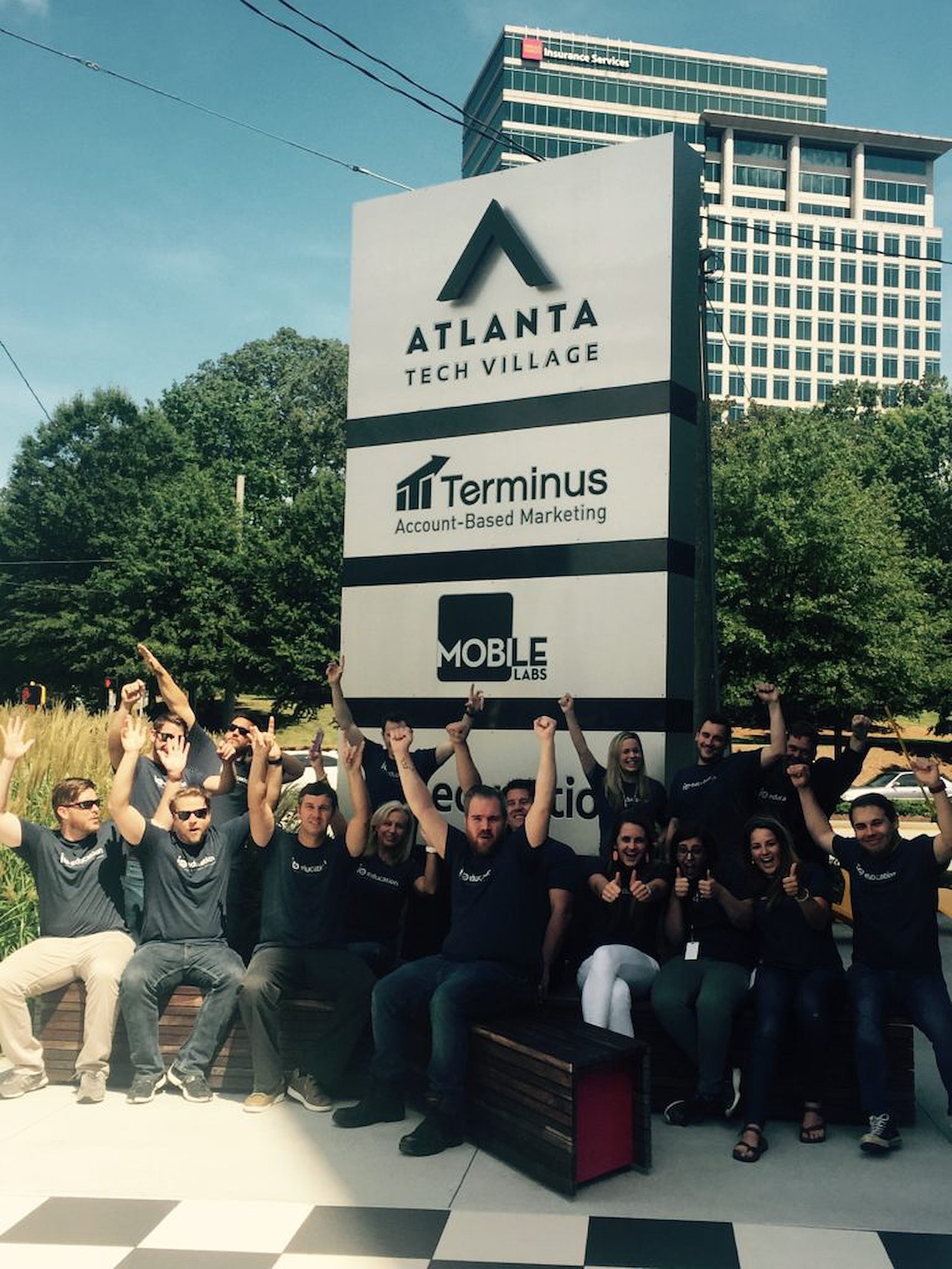
MW: Yep, year one of the student product put us at $120k ARR. Year two (2014) we had around $600k, which is when we decided to move to the Atlanta Tech Village mainly for recruiting purposes.
JB: Share a bit more about the pricing model, what were you charging schools?
MW: Our student product was around $5/student/year and the teacher product was around $1,500/year/school.
JB: At what size did y’all graduate from the Tech Village?
MW: In early 2015, we had reached about $1.85M in ARR. We were running it very lean. Cash flow positive. Not interested in outside capital, didn’t plan on taking any but started to get some calls, just like several entrepreneurs.
JB: Did you do any events like Venture Atlanta?
MW: No. And this may be another mistake I made in my career: I did not understand the value of networking or community. I was 100% focused on solving Cathy’s problem and nothing else professionally mattered. So we didn’t really participate, even when we were in the Village, I had met you, I had met Kyle (Porter), David (Cummings) a couple times and those were just by accident. We were just all focused on what we were doing and what we did, which I’ve learned, investing in your network can really help, but at the time, we just didn’t do it. So the calls I got from investors, I just ignored, aside from a private equity firm in 2015 with a very targeted message that was very specific to my scenario. They said, “We love what you are doing. We think data analytics in K-12 is the next big thing, and there are no clear winners, and the work that you all are doing we think is great, would you be willing to talk to us?”
That call stood out and was interesting because it was very directed at what we were doing. So in 2015 I met with LLR Partners, which is a private equity firm in Philadelphia. They had been talking to another business doing about $10M in ARR that was started by three teachers in New York City, and they were doing some really cool work, very similar to what we were doing. Our focus, mainly because of Cathy, was around elementary schools. We were very focused on the elementary school environment, these teachers in New York City were all high school teachers and they had built this platform around high school use cases. LLR pitched us and said, “These two businesses make a lot of sense together, there are a lot of complementary product functionality. Let’s put these two businesses together and invest additional capital to hire salespeople, more product resources, as well as do additional M&A acquisitions.” That was a big decision for us as a company: did we want to join forces or keep going on our own? Ultimately we decided to partner with LLR and accelerate the opportunities.
JB: What was your revenue at the time?
MW: A little less than $2M in ARR.
JB: That’s an early Private Equity deal isn’t it?
MW: Yeah, LLR traditionally wasn’t interested in a business until they were at least $10M in revenue, but combined we were $12M, which is why it made sense.
JB: Is that when you rebranded the business to IO Education from Longleaf Solutions?
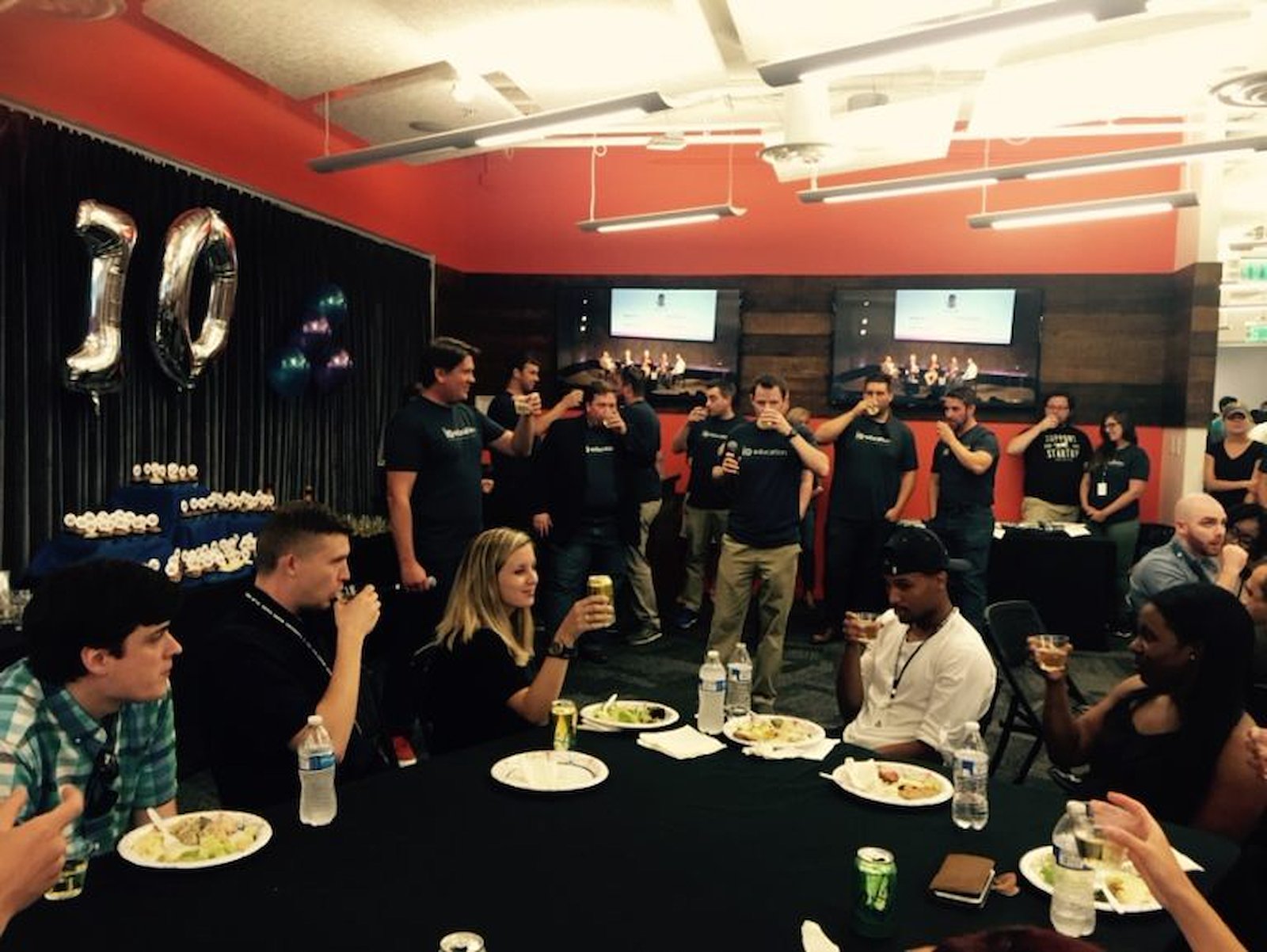
MW: Yes. That business was called CaseNex and they also had DataCation, so we took CaseNex, DataCation, and Longleaf and put them together through LLR and rebranded as IO Education. That was in late 2015 and early 2016.
JB: Ah, and you became the CEO of the new company (IO Education) with all the combined entities?
MW: The teachers who founded CaseNex had built a great business, and through the Horizon experience, going from $0 to ~$40M and then acquired by Roper, and after meeting with all the founders, it just made sense for me to be the CEO. We could grow something special together by being the number one data player in K-12 and we now had the financial backing and core team in order to do that.

JB: So beginning of 2016, you’re the CEO of a $12M ARR business that has a diverse suite of products, with a few different offices around the country…
MW: Correct. Atlanta, New York City, and Charlottesville. At the time we had about 40 employees total and 10 in Atlanta. From there, we hired a bunch of people, built out the senior management team, and started really scaling up.
JB: At this point, y’all graduated from Atlanta Tech Village and moved over in the office space above Tomo?
MW: Yes, 3630 Peachtree Street.
JB: Tell us about the next three years of growth.
MW: When we graduated from ATV, we had about 35 employees in Atlanta. I had no previous private equity experience but what I found in LLR was an outstanding partner. These people were super smart, they understood education, they provided help and support in many areas, and they were very supportive in what we wanted to go do next.
JB: The growth was great. I have to ask: was there any regret in taking investment or selling early?
MW: No, not at all. We obviously had to give up some equity but also had the option to roll equity into the bigger platform. It helped de-riskeded our plan because I felt that data analytics was going to be a big part of the K-12 market and we needed to have the financial backing in order to be number one — that was always the goal.
JB: Can you walk us through the timeline of going from $12M in ARR to the sale to Insight Venture Partners?
MW: In about two and half years, we almost tripled the size of the business.
JB: How did you do that?
MW: It was a challenge. Mainly because we had three company brands and 10 product brands. So the first step was figuring out how to clean all of it up and have a single message to the market. There’s also multiple founders so that’s important to manage and get everyone on the same page. A lot of times when private equity gets involved, the founders leave but these founders were very valuable, they were actually critical to the business, but we had to get everyone on board with the new vision, branding, and plan. There were two key strategies. First, we wanted to integrate and organically grow what we had. Part of that was taking all the work they did and all the work we did and integrating it into one, single platform and just growing that. The second strategy was highlighting key M&A opportunities and our first target was identifying the most rich data set in K-12 which is assessment data and test data. On average, students frequently take formative assessments to measure what they’ve learned and based on those results that informs instruction and creates the opportunity for students to improve. Assessment data is really important and we believed it was vital we owned our own assessment platform. That’s a good example of a great M&A target about six months after we created IO Education. LLR was key in going out and finding targets that we would acquire by engaging with entrepreneurs who saw the vision.
JB: Fast forward to 2018, Insight Venture Partners knocks on your door, how did you respond?
MW: We were fortunate to have quite a bit of inbound interest due to our traction and reputation as a major player in the market in assessment and data analytics. So we were getting calls from financial buyers and strategic buyers wondering if we were interested in selling — which we really weren’t at the time. However we wanted to take the interest seriously so we hired an investment bank to run a focused and targeted process to respond to those inbound calls. We hired Harris Williams and started running a small process. They did a great job positioning us and as a result we had multiple strategic buyers interested and doing diligence while still running the business. It was hard and time consuming and we went to the finish line with multiple potential buyers and eventually Insight and Illuminate are the partners we decided to move forward with. Illuminate was our number one competitor. The transaction was a five way merger including Illuminate, IO Education and three of our mutual competitors. They basically combined five major players in the assessment and data world in one transaction and we were fortunate to be part of that.
JB: That was 2018?
MW: Correct, June of 2018.
JB: How long did you stay after the five way merger?
MW: So Illuminate, which I always had deep respect for, including their founder Lane, had built a really great business. They were a little bit bigger than us at the time and had not done much M&A and since we had done some at IO, Insight had asked me to stay on to help integrate these five businesses together. I saw that as a great opportunity to work with Christine Willig and the leadership of Illuminate. We did a lot of great work in really integrating those businesses and a lot of the heavy lifting was completed at the end of those six months. I felt my value was finished at that point so I decided to leave at the end of 2018. I am a very big believer in Illuminate and where the business is going in the future.
JB: Here you are, just wrapped up your latest business venture, and…
MW: I didn’t take any time off between Horizon and Longleaf / IO Education and had some regrets. The last seven years with that business was a real grind: traveling most every week, working and thinking about the business 24/7. It was hard. My goal was to take a year or two and press reset, spend more time with family, not miss any lacrosse games, and spend a year thinking about what’s next and that’s about the time I ran into you and David at Jack’s Deli.

JB: Crazy. So we ran into you at Jack’s Deli in late 2018?
MW: October of 2018. So I was still in the 6 month transition with Illuminate.
JB: Where was your thinking at that time?
MW: I was looking forward to playing more golf, doing some investing, and just catching my breath. When I ran into y’all at Jack’s Deli, the question, “When was the last time you hit on a golf simulator?” piqued my curiosity. I remember answering, “Pretty much every day or at least a couple times a week” and when this new concept was pitched, it made a lot of sense. So I thought about it and got excited about it.
JB: What is the concept of Intown Golf Club?
MW: Golf is such an amazing community of people. I’ve met some of my best friends through golf. Just this year, I’ve invested in three businesses from friends who I’ve met because of golf. The game has this great connectivity when you’re part of the golf community. The opportunity we are trying to create at Intown Golf Club starts with that golf takes a lot of time and investment. To play a round of golf, it’s five hours and you have to go through a lot of effort. This is one of the main reasons I didn’t play a lot of golf when I was working on building IO Education and prior, because the game takes so much time. And to join a private club is expensive. Access to that community and access to golf has a lot of barriers unfortunately. Our goal with Intown is to create an environment that is curated from some of the best experiences that we’ve had through the game of golf and make that accessible from a time, cost, and ease point of view. Fast forward to now, we found the very best location in Buckhead, we have designed an incredible 12,000 sq. ft. space that’s going to combine a social club aspect with top notch indoor golf technology and wrap a high quality community of like minded individuals around that.


As a tech entrepreneur, the reason I found out about the Atlanta Tech Village was I got invited from a friend of mine who was in the building to a Startup Chowdown (the weekly Friday lunches). That was my first time going to the ATV, I didn’t even know what the Tech Village was. I ate lunch there that day and as soon as I walked in the building, as a tech entrepreneur, I knew I wanted to be part of this community that was built. The whole thing was very appealing for me as a tech entrepreneur. So, we think we have the same opportunity to build that community around golf in urban locations. And the aspect of golf is that if you live in Atlanta and you live intown, we think it exists in pretty much every major city. Our goal is to start here in Atlanta, curate the best experience we can and build the best community we can and replicate that in a lot of places. We think the opportunity is a big one to do that.
JB: From the looks of it, construction has started. Can you share some of the traction with Intown Golf Club?
We’ve been very intentional about building the community. The community of members is the most important aspect of any group.
We’ve spent a lot of time defining who the ideal member is for Intown Golf Club and who is going to add value to the community. We’re fortunate because we’ve had a huge amount of interest with minimal public announcement, most recently in the Atlanta Business Chronicle. So far, we’ve got over 1,100 people that have come inbound either through Instagram or our website and expressed interest in joining. We’ve built a group of really high quality founding members who are referring good members.
JB: How does a potential member join Intown Golf Club?
MW: The easiest way is to go the website, provide your information and we’ll reach out to schedule time for a conversation. That is what we’re doing everyday. We’re having conversations with interested folks and working through the process with Clint Jarvis, my Co-Founder in IGC, who has been instrumental.
JB: You’ve gone from technology startups to a publicly traded company, back to ideas on-a-napkin to private equity and now early paying customers at Intown Golf Club (IGC). Where do you want to take IGC?
MW: There are a couple stages with Intown. We have an incredible opportunity, all this excitement and we’ve gotten great traction so far. In contrast, going back to my early days at Longleaf where everything was hard, IGC has had way more authentic demand in the initial stages and there’s a much stronger pull for the product which has created some outstanding early momentum. The first stage is we need to build and open up our Buckhead location and make the experience incredible. IGC’s new COO, Erwin Macatulad is going to be a big part of making that happen. From there our next big milestone is making sure we can do it outside of Atlanta. We’ve looked at Charlotte. We’ve looked at Nashville. We want to build a community outside of Atlanta and prove we can do it outside our hometown. Once we have that hurdle cleared, then it’s about taking that playbook and being able to bring Intown to every major city in the U.S.
Overall, I believe we have the opportunity to be part of the next major shift in the game of golf which includes growing the sport through non-green grass facilities in a welcoming and approachable culture.

The morning coffee had turned to an afternoon coffee as we wrapped up the interview. Michael had to jump to a design meeting with Ai3 to finalize how the new Intown Golf Club will look and feel when members walk in to the club for the first time in early 2021. For someone who lives to solve a clear problem and see the everyday change, the daily progress of Intown Golf Club provides the oxygen any serial entrepreneur requires to thrive.
Story by Jon Birdsong